


Blog
CSS Compact Substation Supplier in North Delhi: What the Quotation Never Tells You About Life After Day One

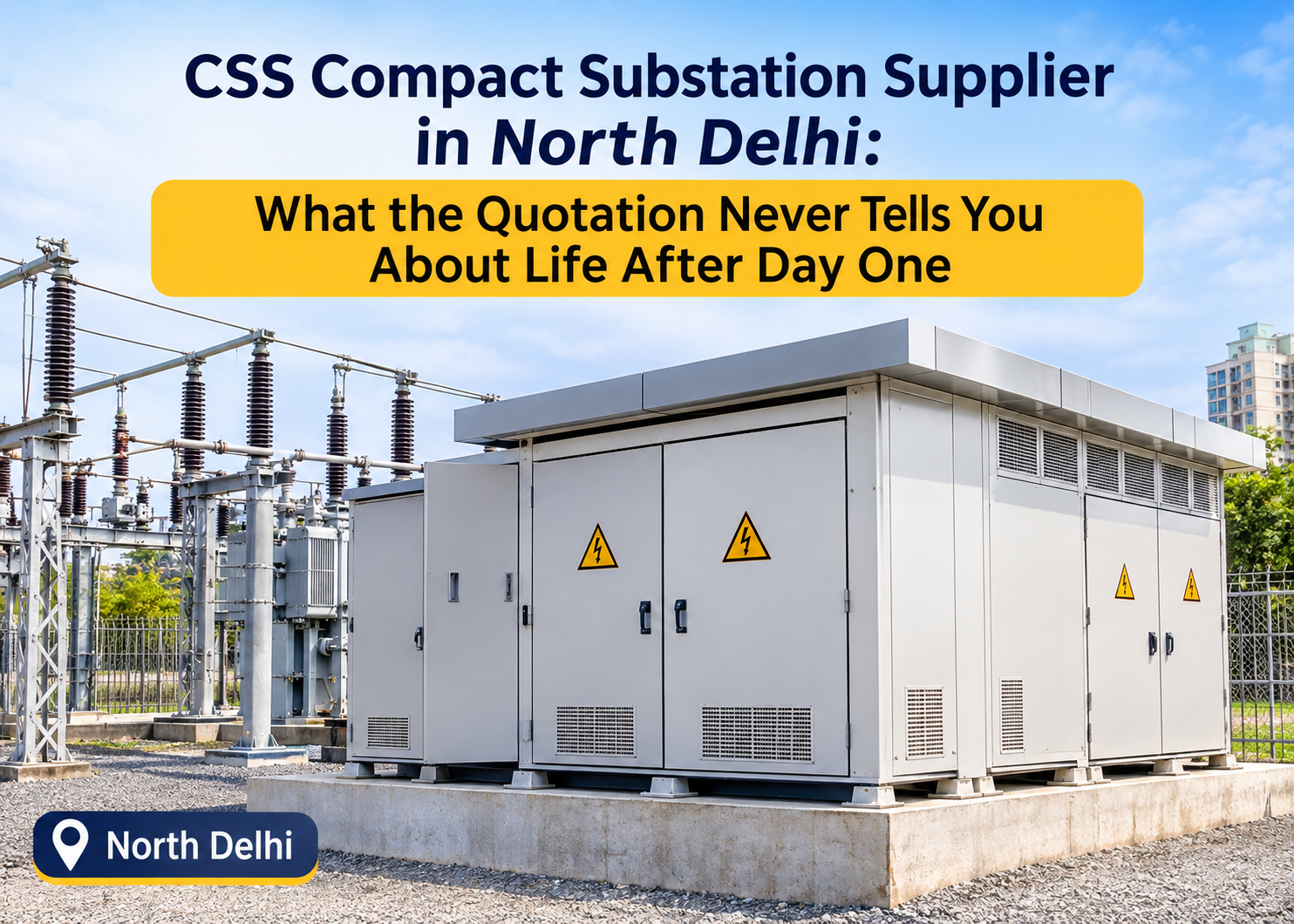
Ask a buyer what they remember about their compact substation purchase and you’ll hear about the price, the kVA rating and the delivery date. Hardly anyone mentions month fourteen, when a ventilation louvre was choked with dust and the transformer began running warmer than it should.
That’s the part of the job nobody puts in a quotation. A compact substation is meant to sit on your plot for decades, mostly ignored. So the real question isn’t only “who can deliver it?” but also “will it still be healthy long after the commissioning photos are forgotten?”
At Arpan Power Projects, we supply compact substations to industrial, commercial and infrastructure buyers, and this guide is the one we wish more buyers read before placing an order. If you’re shortlisting a CSS Compact Substation Supplier in North Delhi, use it as a checklist for both the purchase and the years that follow.
First, a quick refresher: what are you actually buying?
A CSS compact substation (also called a unitized substation) puts three things in one factory-assembled enclosure:
- an RMU (ring main unit) on the high-voltage side
- a transformer that steps the voltage down
- an LV panel that feeds your load
It’s neat, quick to install and needs far less civil work than a conventional substation room. The trade-off is that everything sits close together, so a small neglected problem in one compartment can affect the others.
Why “Day Two” matters in North Delhi
North Delhi isn’t one kind of customer. You’ve got factories and godowns around Narela and Azadpur, housing societies and high-rises in places like Burari, and busy commercial stretches around Model Town. The loads are very different, but two things are common to almost all of them:
- Summer peaks. Load climbs when the AC and cooling demand arrives, and that’s when a weak termination or a blocked vent shows up.
- Dust and grit. Construction, traffic and open plots mean fine dust gets into places you’d rather it didn’t.
A good compact substation supplier in North Delhi should be thinking about these from day one, not after the first complaint.
What to ask your supplier before you order
Most buyers compare price and rating. Add these questions too:
- Will you give me the manual, the single-line diagram and the test reports? You’ll need them again in year five, when nobody remembers who bought the unit.
- Is there clear working space around the doors? A neat enclosure that can’t be opened properly is a maintenance headache.
- What will you stock or support for common wear items? Ask about gaskets, indicator lamps, fuses and similar parts.
- Who do I call when something looks odd? A real name and number beat a generic helpline.
- Can your team brief my electrician on handover? An hour on site now saves a lot of guessing later.
If you want to compare quotes properly before you decide, our earlier piece on why two quotes for the same kVA never match is a good place to start.
The first 30 days after energisation
The first month tells you a lot. Nothing dramatic needs to happen, you just need to pay attention:
- Log the load and voltage from the LV panel at the same time each day, including at your busiest hour.
- Note the transformer temperature indicator during peak load, not just in the cool morning.
- Listen and smell. A steady low hum is normal. A new buzz, crackle or burnt smell is not.
- Check that doors close, lock and seal properly. Transport and installation can shift things.
- Look at the cable entries. Gaps let in water, dust and rodents.
Write it all down. A simple notebook kept near the unit is enough, and it becomes your baseline for everything that follows.
A simple care routine you can actually follow
Here’s a realistic schedule. It isn’t a substitute for your manufacturer’s manual, so if the manual says something different, follow the manual.
| How often | What to do | Who should do it |
|---|---|---|
| Weekly | Walk around the unit. Check vents are clear, look for oil seepage, confirm locks and warning signs are intact, and make sure nothing is stored against the enclosure. | Trained site staff (no opening of live compartments) |
| Monthly | Record load, voltage and temperature readings and compare them with last month. Note any alarms or tripped indicators. | Site electrician |
| Yearly | Plan a shutdown. Do a thermal scan under load first, then check and tighten terminations, test insulation, verify earthing, test the RMU operation, review protection settings and clean the interior. | Qualified electrician or supplier’s service team |
That yearly shutdown is the one that gets skipped, and it’s the one that matters most. Heat from a loose connection builds slowly, and a thermal scan before shutdown is one of the cheapest ways to find it.
Common mistakes we see again and again
- Using the space beside the unit as storage. Cartons, scrap and old cables block airflow and make emergency access harder.
- Adding load without telling anyone. A new machine here, an extra floor of AC there, and the transformer is quietly running past what it was chosen for.
- No owner for the logbook. If everybody is responsible, nobody is.
- Ignoring small changes. A slightly warmer cabinet or a new noise is cheap to investigate early and expensive to investigate late.
- Letting unqualified people open compartments. High-voltage work belongs to authorised, trained people using proper lock-out and safety procedures.
A word on rules and safety
Requirements for testing, inspection and approvals differ by site and by your DISCOM. In most of North Delhi that’s Tata Power-DDL, but please confirm directly with them and your electrical inspector. Don’t rely on a blog, including this one, for compliance.
If you’re also working out approvals and site layout, our guide on DISCOM approvals and space planning in Pitampura covers that side in detail.
When to call your supplier
Don’t wait for the annual check if you notice any of these:
- Temperature readings rising steadily over several weeks at the same load
- Oil seepage or a visible leak
- Indicator or gauge readings outside the normal range in the manual
- Doors, locks or interlocks that no longer work smoothly
- Repeated tripping without a clear cause
Frequently asked questions
How often should a compact substation be serviced?
A quick visual check weekly, readings monthly and a full planned shutdown inspection once a year is a sensible starting point. Always check your manufacturer’s recommendation, as it takes priority.
Does a CSS need a separate building?
No. That’s one of its main advantages. It’s designed as a complete enclosed unit, so you need a proper foundation and working clearance rather than a dedicated substation room.
What documents should I keep?
Keep the manual, single-line diagram, test reports, warranty papers, commissioning record and your own maintenance log together in one folder.
Can I add more load to an existing CSS later?
Only after a qualified person checks the transformer rating, protection settings and cabling. Don’t assume spare capacity exists.
Where can I see the product range?
You can read about our Compact Sub Station (CSS) and our Unitized Substation offerings on the website.
Final thought
A compact substation is easy to forget once it’s humming away on its plinth, and that’s exactly why a little routine goes so far. Choose a CSS Compact Substation Supplier in North Delhi who talks about documents, handover and support as readily as price, and who is still reachable when the unit is five years old.
If you’re planning a project, the team at Arpan Power Projects is happy to talk through your load, site and timeline. Share your requirement through our contact page and we’ll take it from there.