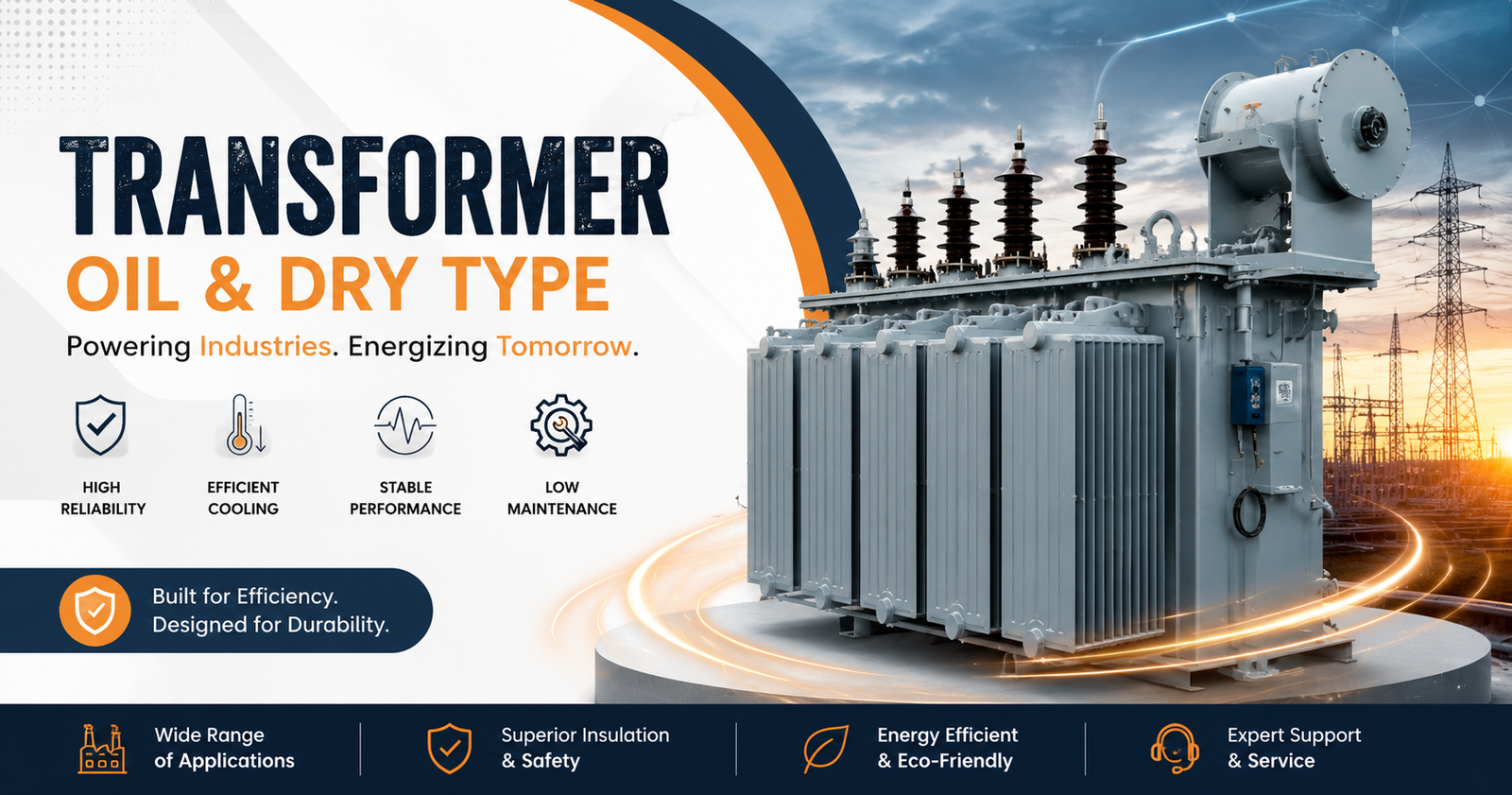
Electricity travels through a complex network before reaching your home, office, or factory. To safely adjust its voltage along the way, one essential device takes the lead—the transformer.
What Is a Transformer?
A transformer is an essential electrical device that increases or decreases voltage while transferring electrical energy from one circuit to another. It ensures electricity travels more efficiently over long distances while making power distribution safer and more reliable.
How Does It Work?
Think of a transformer as a smart voltage controller. Using electromagnetic induction, it transfers electrical energy between windings while adjusting the voltage as needed:
-
- Step-Up Transformer: Boosts voltage for efficient long-distance power transmission.
-
- Step-Down Transformer: Lowers voltage for safer distribution and everyday use.
Where Are Transformers Used?
Transformers are widely used in:
-
- Renewable energy projects
Why Does the Right Transformer Matter?
The right transformer can improve power efficiency, reliability, safety, and overall system performance. Factors such as voltage rating, load capacity, cooling method, installation environment, and application should be considered before selection.
Power Your System the Smarter Way
A transformer may look like just another piece of electrical equipment, but it plays a powerful role behind the scenes—keeping electricity flowing at the right voltage, at the right place, at the right time.
Choose the right transformer. Build a more reliable power system.