

Blog
11KV Outdoor Vacuum Circuit Breaker Panel or PCVCB? How to Read the Spec Sheet Before You Choose

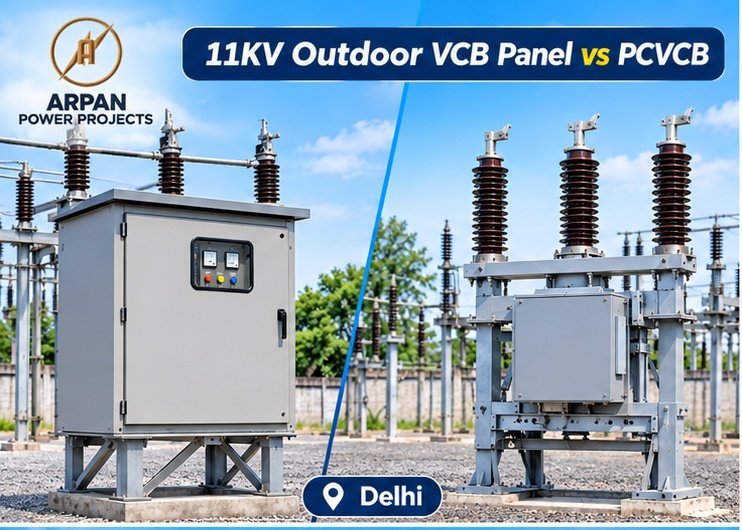
Search for an 11KV Outdoor Vacuum Circuit Breaker Panel and you will meet two kinds of equipment under the same search. One is a cabinet-style panel with the breaker, relay and metering built into an enclosure. The other is an outdoor PCVCB, a three-pole vacuum circuit breaker mounted on a support structure, with a control box below it.
Both switch and protect an 11kV circuit outdoors. They are not the same product, and buyers who confuse them often discover the difference only when the delivery truck arrives.
This guide helps you sort that out. It explains where an outdoor PCVCB fits, then reads the specification sheet of our 11KV Outdoor PCVCB line by line, so you know exactly what you are comparing. It is written for plant engineers, contractors and purchase teams across India who need to buy an outdoor breaker with confidence.
Panel or PCVCB: What Is the Difference?
Both use the same switching technology. In a vacuum circuit breaker, the contacts open inside a sealed vacuum interrupter, which extinguishes the arc when current is interrupted. What differs is how the breaker is built and installed.
| Outdoor VCB panel (cabinet type) | Outdoor PCVCB | |
|---|---|---|
| Form | Breaker housed inside an enclosure, usually with protection and metering equipment | Three-pole breaker with insulated outdoor poles, mounted on a structure |
| Installation | Placed on a plinth | Mounted on a support structure |
| Best when | You want the breaker, relay and indication in one enclosed unit | You need a breaker at an open-air HT point |
A cabinet-style unit is often the better fit when metering and indication need to sit with the breaker. A PCVCB suits an open-air HT yard where the breaker is installed on a structure. If you are leaning toward the cabinet route, look at our 11KV Outdoor VCB Panel page. If you are comparing, our guide on what is actually inside an outdoor VCB kiosk also helps.
A note on terms: suppliers use “PCVCB” for different insulation types. Always confirm in writing which one your supplier means. Our listing states porcelain.
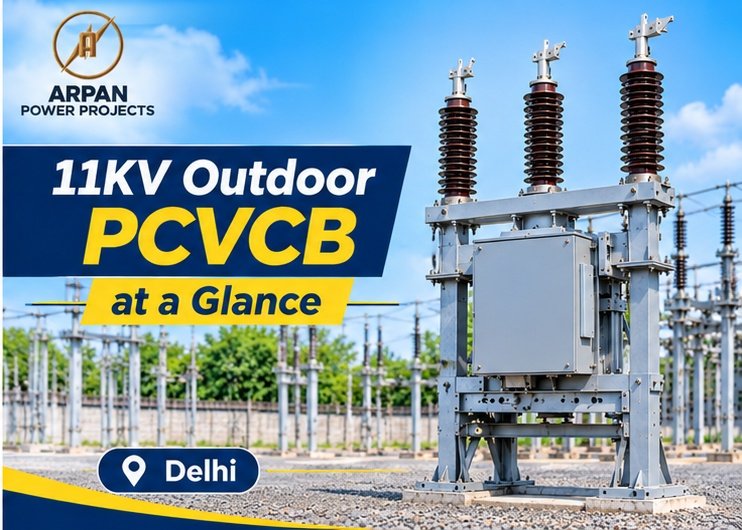
Our 11KV Outdoor PCVCB at a Glance
These are the specifications from our listing:
| Parameter | Detail |
|---|---|
| Minimum order quantity | 1 piece |
| Rated voltage | 11 kV |
| Rated current | 1250 Amps |
| Number of poles | 3 |
| Material | Porcelain |
| Type | Outdoor |
| Automation grade | Automatic |
| Warranty | 18 months |
| Mounting type | Structure mount |
| Degree of protection | IP54 |
| Phase | 3-phase |
| Approx. price | Rs 1,35,000 per piece |
The price is approximate. The final figure depends on your configuration and requirement, so ask for a written quotation. Confirm the warranty terms in writing as well. Our 11KV & 33KV PCVCB page has the product details and enquiry option.
Reading the Specification Sheet, One Line at a Time
Minimum Order Quantity: 1 Piece
A single unit is enough to start. This suits a single feeder, a small plant or a replacement, and you do not need to commit to a bulk order.
Rated Voltage: 11 kV
This tells you the system the breaker is designed for. It must match your supply. For other voltage classes, see our 33KV Outdoor VCB.
Rated Current: 1250 Amps
This is the continuous current the breaker is rated to carry. Work out your actual load current and leave room for growth. A rating too close to your load leaves no margin, while one far above it adds cost you may not need.
Number of Poles: 3 and Phase: 3-Phase
Three poles match a three-phase supply, with one pole per phase. This is why the photo shows three insulator columns.
Material: Porcelain
The pole insulation is porcelain, a long-established outdoor insulating material that stands up well to weather and sunlight. It is also heavy and can chip or crack if handled roughly, so careful transport, lifting and unloading matter. Ask your supplier how the unit is packed and what lifting arrangements it needs.
Type: Outdoor
The breaker is designed to be installed in open air, instead of inside a switch room. It has to cope with sun, rain, dust and temperature swings, and the site needs clearance and safe access around it.
Automation Grade: Automatic
The listing shows an automatic grade. Because “automatic” can mean different things to different buyers, ask the supplier exactly what it covers: how the breaker operates, what control and protection it comes with, and what you need to supply (such as auxiliary power or a relay). Get this answer in writing.
Mounting Type: Structure Mount
The breaker is designed to be mounted on a support structure, and the photo shows a steel frame. Check that your civil and structural plan allows this. Discuss foundation, structure height, bolt positions, earthing and cable routing with your supplier before delivery.
Degree of Protection: IP54
The IP rating describes how well an enclosure resists dust and water. IP54 means protection against dust ingress (limited, not fully dust-tight) and against splashing water from any direction. That suits many outdoor installations. If your site has heavy dust, very heavy rain or washdown conditions, confirm whether IP54 is enough.
Warranty: 18 Months
Ask for the terms in writing: what is covered, what is excluded, and from which date the period starts (dispatch, delivery or commissioning).
One Number the Listing Does Not Show: Breaking Capacity
The listing gives voltage, current, poles, material and protection degree. It does not show the short-circuit breaking capacity, which is the fault current the breaker can safely interrupt, normally written in kA.
This rating decides whether the breaker is safe on your network. The right value depends on the fault level at your supply point, which your utility or consultant can confirm. When you send an enquiry, ask the supplier to state the breaking capacity in the quotation and match it against your fault level. A breaker rated below your actual fault level is a safety risk.
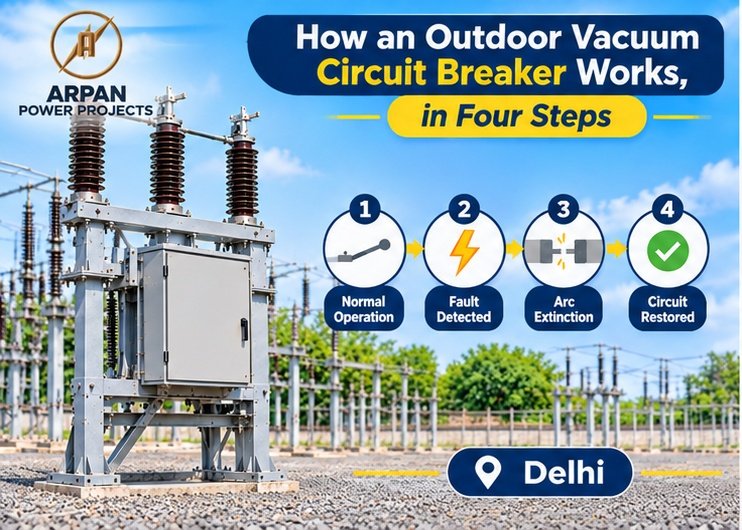
How an Outdoor Vacuum Circuit Breaker Works, in Four Steps
- Normal operation. The three poles are closed, and the breaker carries current to the load.
- A fault occurs. Current rises sharply beyond normal levels.
- The protection acts. The control and protection arrangement tells the breaker to open.
- The vacuum interrupter clears the fault. The contacts separate inside the sealed vacuum bottle, and the arc is extinguished at a natural current zero.
A strong breaker with poorly set protection can still fail to protect your plant. We explain this in why relay settings matter as much as the breaker itself. For a deeper look at the full sequence from fault to trip, read our guide to the 11KV Outdoor Vacuum Circuit Breaker Panel.
What Moves the Price
Our listing shows an approximate price of Rs 1,35,000 per piece. Two quotations can still differ because of:
- Rated current and breaking capacity you specify
- Control and protection scope, including what the “automatic” grade covers
- Mounting structure and whether it is included
- Insulation material and construction
- Testing and documentation provided
- Transport, lifting and delivery to your site
- Warranty terms
Compare scope line by line before you compare totals.
Seven Things to Settle Before You Request a Quotation
- System voltage. Confirm it is 11 kV.
- Load current and growth. Check it against the 1250 A rating.
- Fault level. Ask your utility or consultant, then ask the supplier for the matching breaking capacity.
- Control and protection scope. Be clear on what comes with the breaker and what you provide.
- Mounting plan. Confirm the support structure and foundation.
- Site conditions. Dust, rain, heat, space and access.
- Delivery and lifting. Plan crane access and unloading for porcelain equipment.
Basic Care After Installation
- Inspect the porcelain insulators for cracks, chips and heavy dirt
- Keep the control cabinet closed, clean and dry
- Check the mounting structure, bolts and earthing connections
- Look for rust, water entry and damaged seals
- Keep the area around the breaker clear of vegetation and stored material
- Have a qualified person inspect and test the breaker as recommended by the manufacturer
If you notice damage, do not operate the breaker. Isolate it and call a qualified engineer.
Questions to Ask Any Supplier Before You Order
- Which insulation material is used, and is it stated in the quotation?
- What are the rated voltage, current and breaking capacity?
- What does the “automatic” grade include?
- What are the mounting requirements and structure dimensions?
- Is the IP54 rating suitable for my site?
- What tests are done, and will I receive the reports?
- What does the 18-month warranty cover, and from which date?
- Who supports the unit after delivery?
Why Buyers Approach Arpan Power Projects
Arpan Power Projects is a supplier, channel partner and stockist of electrical power distribution equipment, serving customers across India. Our range covers 11KV and 33KV RMUs, indoor and outdoor VCBs, HT panels, transformers and compact substations. If your project needs more than one item, you can discuss the breaker, panel and other equipment with one team. Our registered office is at Netaji Subhash Place, Pitampura, New Delhi.

Frequently Asked Questions
1. What is an 11KV Outdoor Vacuum Circuit Breaker Panel?
It is outdoor switchgear built around a vacuum circuit breaker for an 11kV system. In a cabinet-type panel, the breaker sits inside an enclosure with its protection and metering. An outdoor PCVCB is a related option: a three-pole breaker with insulated poles, mounted on a structure.
2. Is a PCVCB the same as a VCB panel?
No. A PCVCB is a breaker unit mounted on a structure. A VCB panel is a complete assembly with the breaker inside an enclosure. Both use vacuum interrupters, but the form and installation differ.
3. What does PCVCB stand for?
The term is used for a vacuum circuit breaker with insulated outdoor poles. Suppliers use it for different insulation types, so always confirm the material in writing. Our listing states porcelain.
4. What is the rated voltage and current of this PCVCB?
The listing shows a rated voltage of 11 kV and a rated current of 1250 Amps.
5. What does IP54 mean?
IP54 indicates protection against dust (limited ingress) and against splashing water from any direction. It suits many outdoor sites, but confirm with your supplier if your site is very dusty or exposed to heavy rain.
6. What is the approximate price?
Our listing shows approximately Rs 1,35,000 per piece. The final price depends on your configuration, so request a written quotation.
7. What warranty does it come with?
The listing mentions an 18-month warranty. Ask for the terms, including what is covered and the start date, in writing.
8. What is the minimum order quantity?
The minimum order quantity is 1 piece.
9. How is it installed?
It is a structure-mount type, so it is installed on a support structure. Plan the foundation, structure and cable routing in advance, and arrange suitable lifting equipment for delivery.
10. How do I request a quotation?
Send your system voltage, load current, fault level, site details and protection requirements. You can use the Request Quotation option on our product page, or call us.
Final Thoughts
Choosing an 11KV Outdoor Vacuum Circuit Breaker Panel or an outdoor PCVCB starts with knowing what you are actually buying. After that, a specification sheet is only useful if you read it as a set of questions. Is the voltage right? Is the current sufficient? What breaking capacity matches my fault level? Does the structure fit my site? What does the warranty really cover?
Share your requirement with Arpan Power Projects on +91 98688 64101 or through the PCVCB product page. Our team will help you work out the right configuration.