

Blog
CSS Compact Substation Supplier in India: Factory-Built Package or Substation Room? How to Decide Before You Place the Order

Ask any project manager what slows down a power distribution job, and the answer is rarely the equipment itself. It is the civil work around it. The substation room needs drawings, bricks, curing time, cable trenches and approvals, and everything else waits.
That is why more buyers are now looking for a reliable CSS Compact Substation Supplier in India instead of building a traditional substation. A compact substation arrives as one factory-assembled unit. It has a transformer, a ring main unit and a low voltage panel inside a single enclosure.
But “compact” does not automatically mean “right for your site”. A unit that fits one plot perfectly can overheat on another, or leave you short of feeders after one expansion. Most disappointments happen because the decision was made on price and size, without looking at load, heat, access, approvals and support.
This guide is written for the person who has to approve the purchase. It explains how a CSS compares with a conventional substation room, what each part does, which specifications matter, what drives the price, how installation and commissioning usually go, and what to ask a supplier before you commit. Read it once, and your next quotation will be much easier to judge.
What You Are Actually Buying in a Compact Substation
A compact substation (also called a unitized substation or CSS) combines three main parts in one enclosure:
- Ring Main Unit (RMU): receives the high voltage supply and switches and protects the incoming and outgoing HT circuits
- Transformer: steps the voltage down to the level your load needs
- LV panel: distributes low voltage power to your feeders, with protection
Everything is assembled and tested at the factory. It arrives ready to be placed on a plinth and connected to the incoming cable and your outgoing feeders. If you want the product-level details, our Compact Sub Station (CSS) page covers the configuration and features.
The idea is simple. Instead of buying three separate items, building a room for them, and then wiring them together on site, you receive one integrated package. Fewer joints made on site means fewer chances of wiring mistakes, and a shorter route from delivery to energisation.
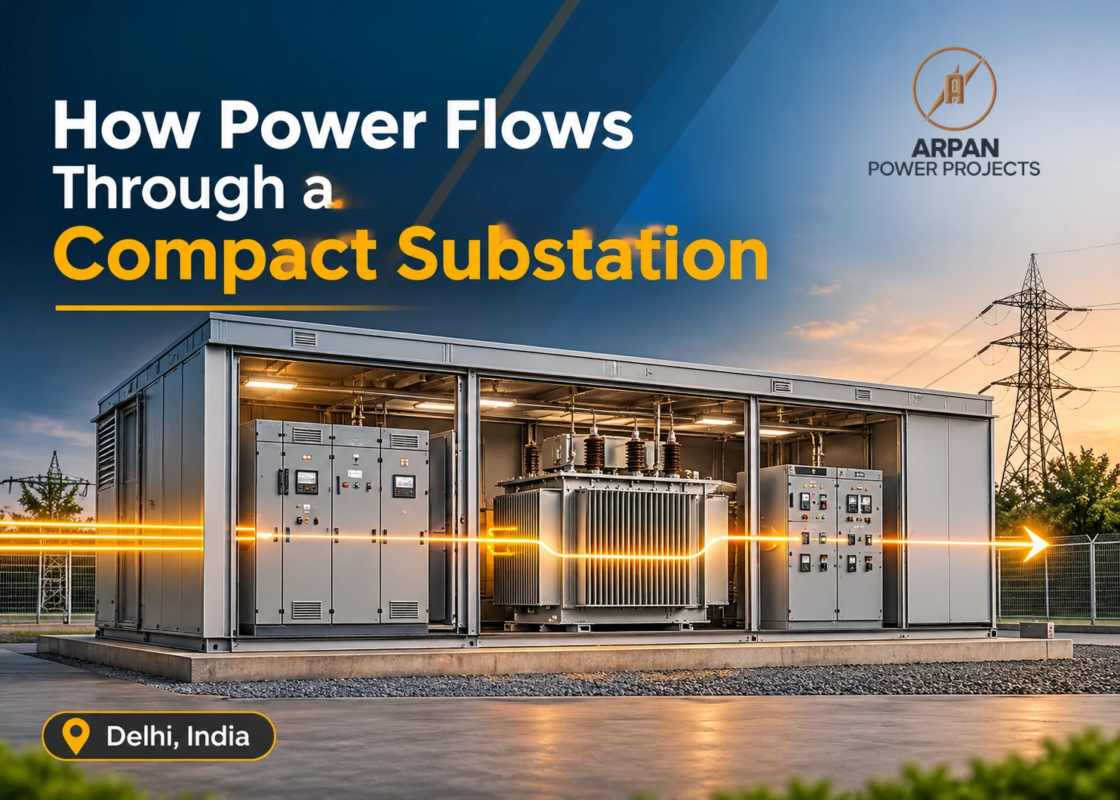
How Power Flows Through a Compact Substation
Understanding the flow makes every specification easier to read.
- HT supply comes in through a cable into the RMU section. The RMU lets you switch and isolate the incoming supply, and it also provides protection for the transformer circuit.
- The transformer steps the voltage down. In the unit we list, the rated secondary voltage is 433 V, which is the standard three-phase low voltage level used by most industrial and commercial loads.
- The LV panel receives that supply through an incomer and splits it into outgoing feeders. Each feeder goes to a distribution board, motor control centre, lift, pump set or other load.
If any of the three sections is under-sized or poorly matched, the whole package suffers. A transformer that is too small for the load will run hot. An LV panel with too few feeders forces you to add a second board outside. An RMU with the wrong protection arrangement will trip too often, or not when it should.
A Closer Look at Each Component
The Ring Main Unit (RMU)
The RMU is the HT switching and protection section. It lets the operator open or close the supply safely and isolate the transformer for maintenance. Depending on the configuration, an RMU can protect the transformer with fuses or with a vacuum circuit breaker. If you want to understand that choice in plain language, we explained it in our guide on fuse versus vacuum breaker in an 11kV RMU.
When you ask for a CSS, specify how many HT ways you need. For example, one incoming, one outgoing and one transformer-protection way is a common arrangement for a ring network. Your utility or consultant may require something different, so confirm it before ordering.
The Transformer
The transformer is the heart of the unit and the largest cost item. The unit we list uses an oil cooled distribution transformer, which is a widely used and well understood type. A few points deserve attention:
- Rating in kVA must be matched to your connected load and realistic growth, not just today’s reading.
- Cooling and insulation type affects installation rules. Oil-filled units need you to think about oil containment and fire safety as per your site and applicable norms.
- Losses matter over the life of the unit. A transformer runs 24 hours a day, so efficiency has a long-term cost.
- Vector group and tap settings should match what your system needs. Confirm them with your consultant instead of leaving them to assumption.
If your site has strict rules about oil-filled equipment, ask whether a dry type transformer is more suitable. We also supply a dry type transformer, and our conventional oil-type transformer page lists that option separately.
The LV Panel
The LV panel is the part your site team interacts with daily. It holds the incomer and the outgoing feeders, and it can also include metering and other protection devices, depending on scope. Ask for:
- The number and rating of outgoing feeders
- The type of protection on each feeder
- Whether metering and indication are included
- Whether space is kept for a future feeder or capacitor bank
Buyers often finalise the transformer first and treat the LV panel as an afterthought. That is a mistake, because the LV panel decides how neatly your plant can be fed.
The Enclosure
All three parts sit in a mild steel enclosure, as per the specification we list. The enclosure protects people from live parts and protects the equipment from the weather. It also has to let heat out. Ask about ventilation, doors, locking arrangements and the finish, because these decide how the unit behaves over years of outdoor exposure.
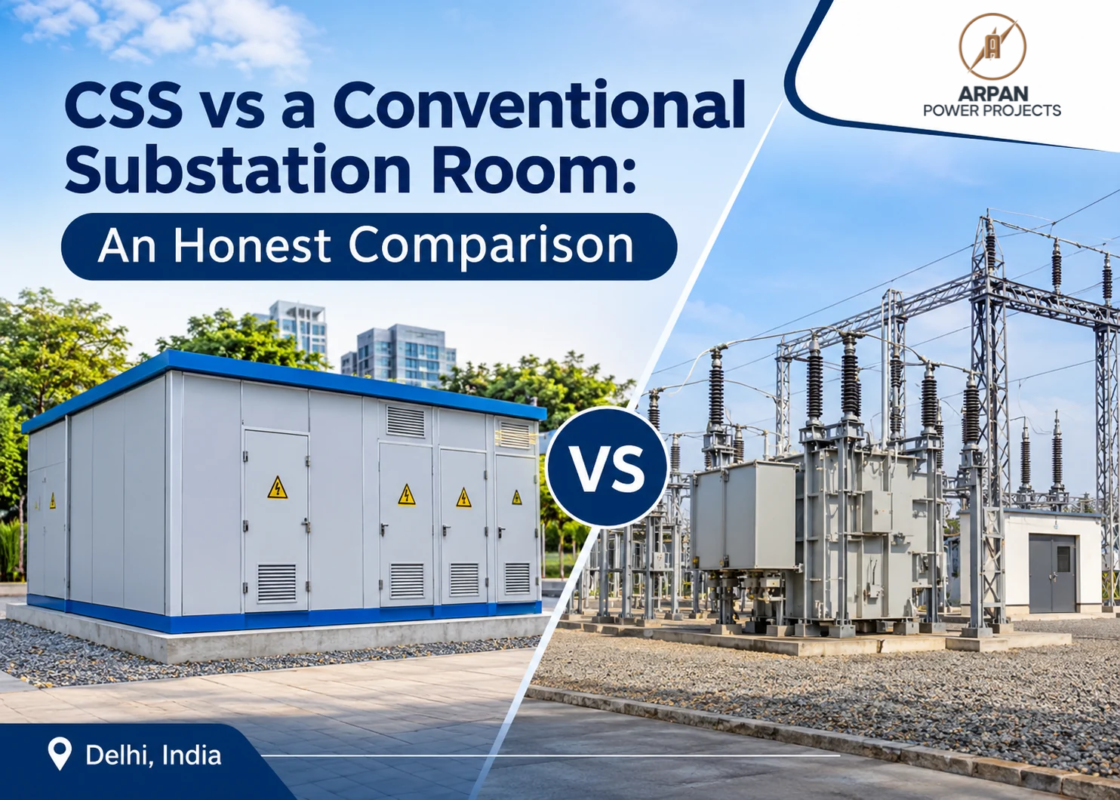
CSS vs a Conventional Substation Room: An Honest Comparison
Neither option wins everywhere. This is how they usually compare on a real project:
| Factor | Compact Substation (CSS) | Conventional Substation Room |
|---|---|---|
| Civil work | Plinth and cable entry only | Full building, trenches, ventilation |
| Site time | Shorter, because most work is done in the factory | Longer, because many trades work in sequence |
| Footprint | Small and enclosed | Larger, with room for each equipment bay |
| Customisation | Within the enclosure’s layout | Very flexible |
| Heat management | Depends on enclosure ventilation design | Room can be designed for airflow |
| Future expansion | Add another unit or plan spare capacity | Easier to add bays inside the room |
| Safety | Enclosed, with limited exposure to live parts | Depends on room design and discipline |
| Coordination | One supplier, one tested package | Several suppliers and trades |
A CSS usually makes sense when:
- Space is tight or the plot is irregular
- The schedule is tight and civil work would delay commissioning
- Power is needed at a remote site where building a room is difficult
- You want one tested package instead of coordinating three suppliers
A conventional room may be better when:
- You expect heavy expansion and want many bays
- The load is very large and needs a custom layout
- You already have a suitable building and only need to fit equipment
The deciding factor is often how fast you need to energise. A compact substation removes a large block of site work, so the project moves forward sooner.
Where a CSS Gets Used
From what we see in enquiries, compact substations fit these segments:
- Industrial plants and factories, where a dedicated supply for production lines is needed
- Commercial buildings and complexes, where basement or plot space is limited
- Utility and distribution networks, where a ring-fed unit supports local supply
- Infrastructure and construction projects, where speed of setup matters
- Solar and other renewable energy projects, where power has to be stepped and evacuated near the site
A good CSS Compact Substation Supplier in India should ask about your application before quoting. A warehouse, a hospital and a solar plant do not need the same configuration, and a supplier who quotes without asking is guessing.
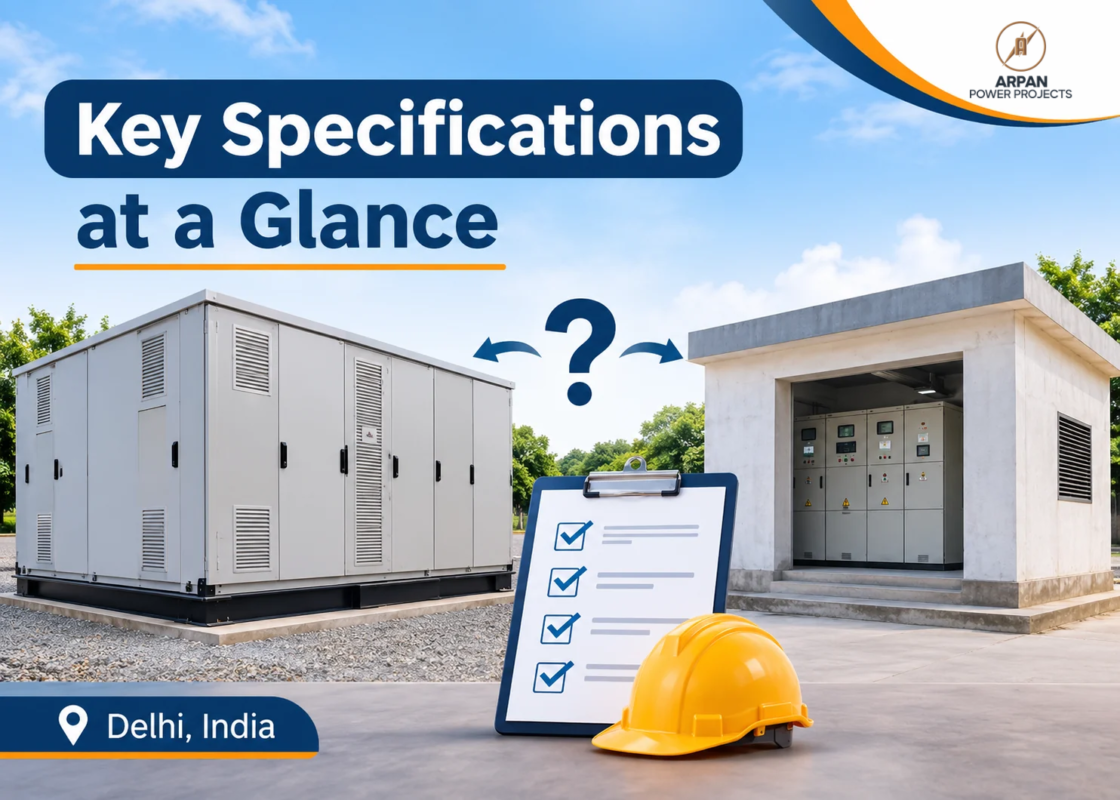
Key Specifications at a Glance
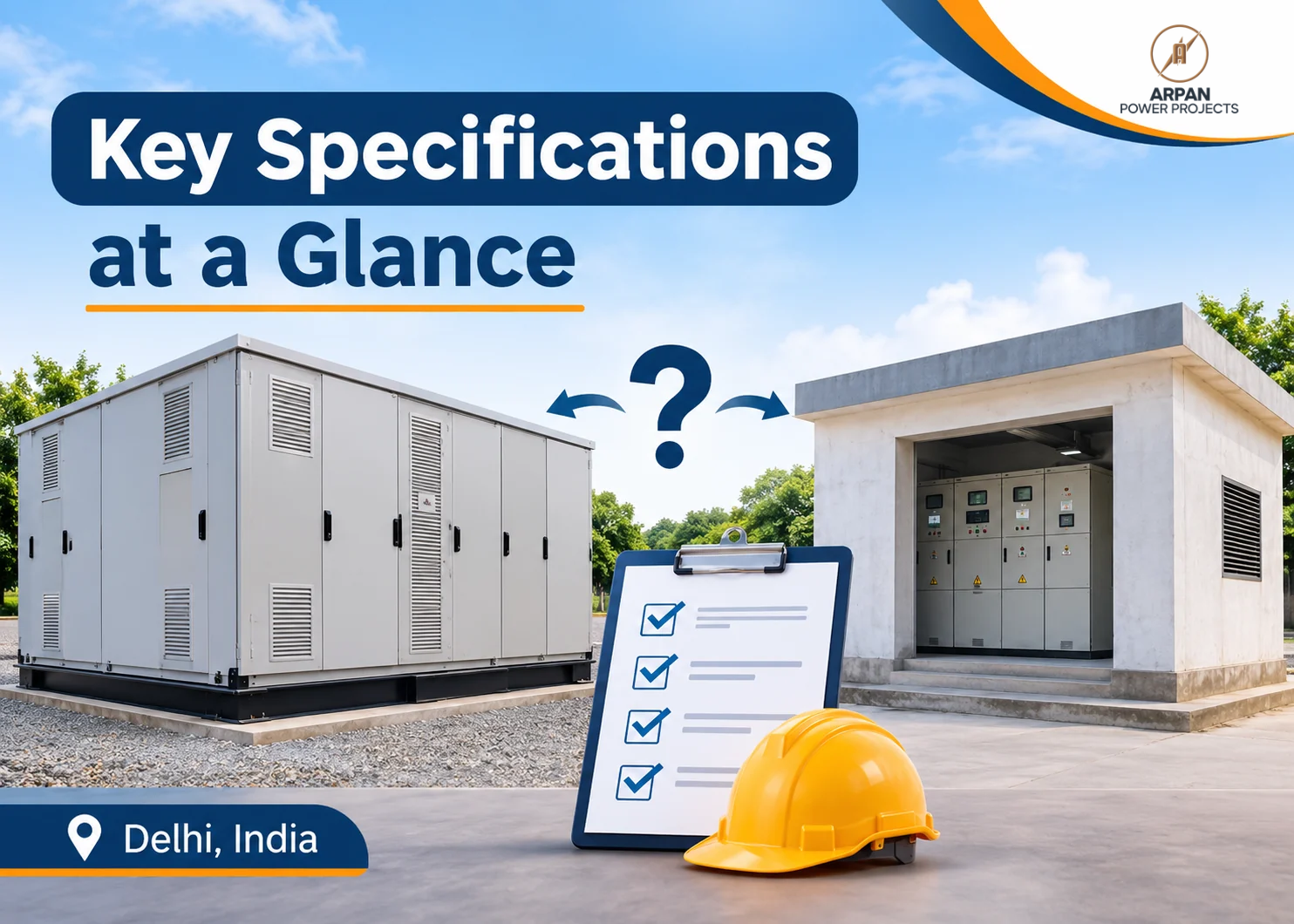
This is the specification set for the compact substation we list:
| Parameter | Detail |
|---|---|
| Minimum order quantity | 1 piece |
| Phase | Three phase (3-phase) |
| Frequency | 50 Hz |
| Transformer type | Distribution transformer |
| Cooling type | Oil cooled |
| Body material | Mild steel |
| Rated secondary voltage | 433 V |
| Warranty | 18 months |
| Approx. price | Rs 14,00,000 per piece (varies with configuration) |
Treat the price as an indicator. The final figure depends on rating, HT voltage, RMU configuration and LV panel layout. Confirm the warranty terms in writing in your quotation.
A few notes on reading this table:
- Three phase and 50 Hz match the standard Indian supply, so there is nothing unusual to plan around.
- Oil cooled means an oil-filled distribution transformer. Ask your consultant about oil containment and fire rules for your site.
- 433 V is the rated secondary (LV) side. Make sure it matches your load equipment.
- Rating in kVA is not in the table because it is project-specific. Share your connected and expected load, and the supplier should size it.
Seven Things to Settle Before You Ask for Quotations
Buyers who send vague requests get vague quotes that cannot be compared. Fix these first:
- Load and capacity. Work out your present load and realistic growth. Do not size only for today.
- HT supply details. Share the incoming voltage and the available fault level if you have it.
- Transformer preference. Oil cooled or dry type, and any sealed-versus-conservator preference.
- RMU configuration. How many ring and transformer-protection ways you need, and whether you prefer fuse or breaker protection.
- LV panel scope. Number of outgoing feeders, ratings, metering and any capacitor requirement.
- Site conditions. Ambient temperature, dust, humidity, flooding risk and access for a crane or truck.
- Civil readiness. Plinth size, cable entry, earthing and oil containment, if required at your site.
Item 6 is often missed. A transformer gives off heat, and the enclosure has to release it. A unit that performs well in a cool test bay can run hotter on a summer afternoon. Ask the supplier how the enclosure handles ventilation and heat in your conditions.
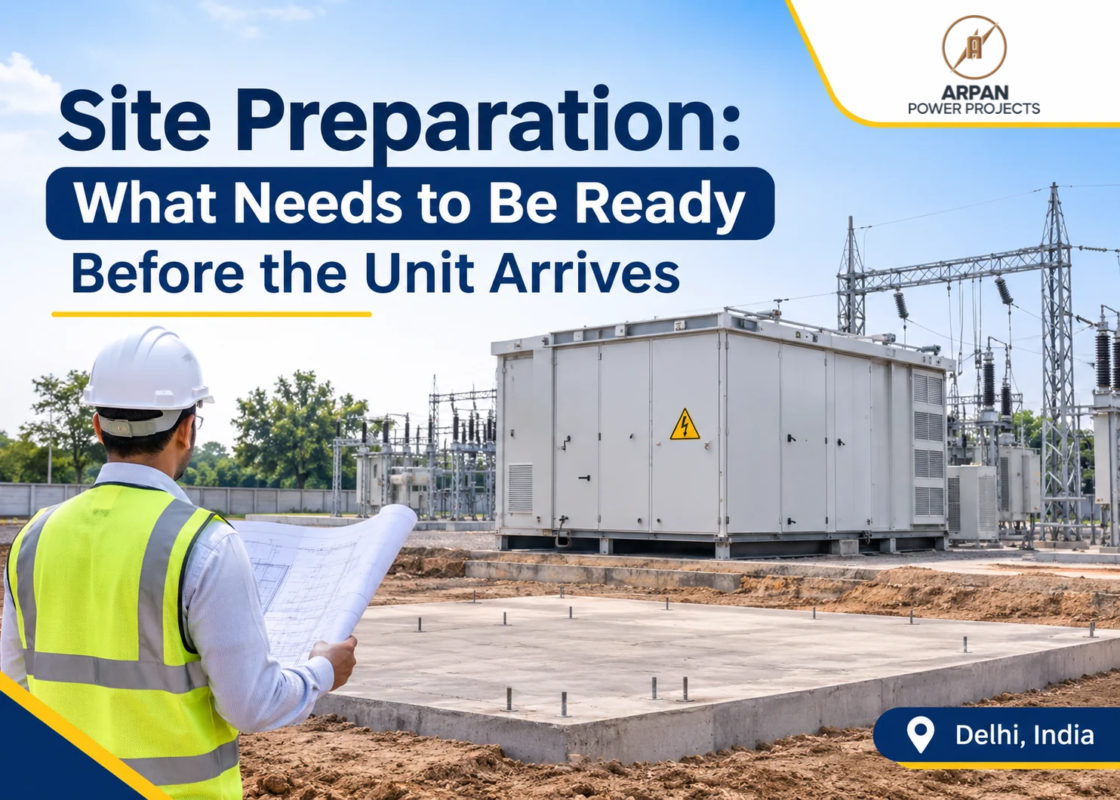
Site Preparation: What Needs to Be Ready Before the Unit Arrives
A compact substation reduces civil work, but it does not remove it. Before delivery, check these points:
- Plinth. A level, properly cured plinth of the right size, with cable entry openings in the right place. An uneven plinth causes door alignment and sealing problems.
- Access. The truck and crane must reach the spot. Check turning space, overhead obstructions, gate width and ground strength.
- Cable routes. HT incoming and LV outgoing cable paths should be planned in advance, with proper bending space.
- Earthing. Earth pits and connections should be ready or planned, as per your site design and applicable standards.
- Oil containment. If the unit is oil-filled, confirm what your site or fire rules require.
- Clearances. Keep working space around doors and ventilation openings. Do not stack material against the enclosure.
Every one of these is small, but each can delay energisation by days if missed. The best time to check them is before the unit leaves the factory, not after it arrives.
Testing and Commissioning: What a Careful Buyer Should Ask About
A compact substation is tested at the factory, but it still has to be commissioned at your site. Ask your supplier to explain:
- Factory tests. Which tests are done on the transformer, the RMU and the LV panel, and whether you receive the reports.
- Pre-energisation checks. Typically these include insulation checks, protection and interlock checks, earthing verification and a final inspection of connections and oil level.
- Approvals. Your state or utility may require inspection or approval before energisation. Ask early who handles which paperwork.
- Handover. A short briefing for your operator on isolation, switching and what to do in a fault.
An unbriefed operator is a real risk. Equipment can be perfect, and the first problem still turns into an outage because nobody knows the switching sequence.
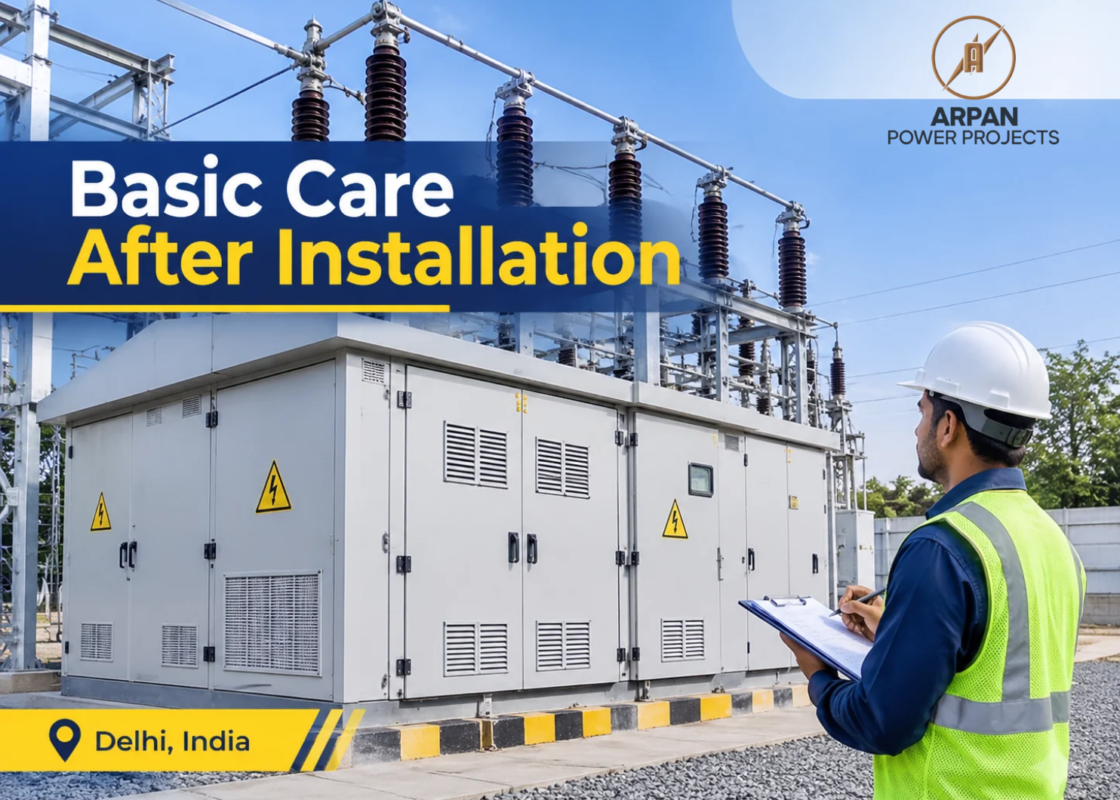
Basic Care After Installation
A compact substation is low-effort, but not no-effort. A simple routine helps it last:
- Keep the enclosure clean, dry and free from vegetation and stored material
- Check ventilation openings so they are not blocked by dust or debris
- Watch for oil leaks, rust or damaged paint
- Keep the earthing connections intact
- Record load readings so you can spot slow growth beyond rating
- Arrange periodic inspection by a qualified person
Follow the supplier’s maintenance guidance for your particular unit. If something looks wrong, switch off and call a qualified electrician instead of experimenting.
Common Mistakes Buyers Make
After seeing many enquiries, the same mistakes keep appearing:
- Sizing only for today’s load. The unit is full the moment you add a new line.
- Comparing price without scope. One quote leaves out the LV feeders, another leaves out testing.
- Ignoring heat. A good rating on paper means little if the enclosure cannot release heat in summer.
- Skipping the drawing review. Many problems are visible on a general arrangement drawing and invisible on a price sheet.
- Leaving civil readiness to the last week. The plinth is late, and the crane waits.
- Forgetting approvals. The unit is installed, and energisation waits for paperwork.
- No operator briefing. Nobody on site knows the isolation sequence.
Avoiding these seven saves more money than negotiating the price down.
What Moves the Price of a Compact Substation
Two quotations for a “compact substation” can differ a lot, and the reason is usually in the scope:
- Transformer rating and type: the largest single cost item
- RMU configuration: more ways and more protection add cost
- LV panel complexity: feeders, metering and protection devices
- Enclosure construction and finish: thickness, paint and weather protection
- Testing and documentation: the scope of factory tests and reports
- Transport and installation: distance, lifting and site support
When you compare quotes, compare scope line by line. A lower price with fewer features is not a saving. It is a smaller product.
How to Judge a Supplier Before You Order
Whether it is us or anyone else, put these questions to the supplier:
- Can you share a general arrangement drawing and a single-line diagram? A serious supplier produces these quickly.
- Which tests are done at the factory, and do you provide test reports? Ask this for the transformer, the RMU and the LV panel.
- Which standards do the components follow? For reference, IS 1180 covers outdoor distribution transformers, and IEC 62271-202 covers prefabricated high-voltage/low-voltage substations. Ask which ones apply to your unit.
- What does the warranty cover and from which date? Written terms are better than a verbal “18 months”.
- Who supports the unit after delivery? Someone has to pick up the phone.
- Can the unit reach my site? Ask about transport and unloading arrangements.
- Will the quotation state the scope clearly? Vague scope is where disputes begin.
A Simple Timeline for Buying a Compact Substation
Timelines vary by project and supplier, but the sequence is usually the same:
- Define the requirement: load, HT supply, transformer type, RMU and LV scope
- Request quotations and drawings from shortlisted suppliers
- Compare scope and terms, not only price
- Approve drawings and confirm specifications in writing
- Prepare the site: plinth, access, cable routes and earthing
- Factory assembly and testing, followed by dispatch
- Installation and connection at site
- Commissioning, approvals and handover
Steps 4 and 5 are where most delays happen. Finish them early, and the rest tends to move smoothly.
Why Buyers Approach Arpan Power Projects
Arpan Power Projects is a supplier, channel partner and stockist of electrical power distribution equipment, serving customers across India. Our range covers 11KV and 33KV RMUs, indoor and outdoor VCBs, transformers and compact substations. That helps when your job needs more than one item, because you can discuss the HT switching, the transformer and the compact substation with one team.
For example, if your project also needs HT switching, you can look at our outdoor RMU range. If you want to compare packaged options, our Unitized Substation page is a good next step. Our registered office is at Netaji Subhash Place, Pitampura, New Delhi, and we handle enquiries from across the country.
Not sure about your site? Our earlier guides cover specific situations in more detail. These include space and DISCOM approvals in Pitampura, fitting a substation into a South Delhi neighbourhood, sizing a unit for a tight Daryaganj plot, and what happens after delivery in North Delhi.
Frequently Asked Questions
1. What is a CSS compact substation and where is it used?
A CSS combines a transformer, a ring main unit and an LV panel in a single enclosure. It receives power at a higher voltage, steps it down and distributes it to the load. It is used in industrial plants, commercial buildings, utility networks, infrastructure projects and solar projects, especially where space is limited or the schedule is tight.
2. How do I choose a good CSS Compact Substation Supplier in India?
Check whether the supplier shares drawings, explains factory tests, gives written warranty terms and offers support after delivery. Ask them to clarify the scope in the quotation instead of comparing only the price. A supplier who asks about your load, site and application before quoting is usually more reliable than one who quotes instantly.
3. What is the difference between a compact substation and a unitized substation?
The two terms are commonly used for the same type of factory-assembled substation. Because layouts vary, confirm the exact configuration (HT, transformer and LV sections) in the drawing before ordering.
4. What are the main components of a compact substation?
The three main parts are the ring main unit, the transformer and the LV panel. They sit together in one enclosure, which keeps the footprint small and the connections short. The enclosure itself, including ventilation and finish, also affects performance.
5. What warranty does the compact substation come with?
Our listing mentions an 18-month warranty. Please confirm the terms, including what is covered and from when it starts, in your written quotation.
6. Should I choose an oil cooled or dry type transformer?
Oil cooled transformers are widely used and well understood. Dry type transformers can suit sites with stricter fire or indoor-installation requirements. The right choice depends on your site rules, location and budget, so discuss it with your consultant and supplier.
7. What is the minimum order quantity?
The minimum order quantity on our listing is 1 piece, so a single unit is enough to start a project.
8. Can a compact substation be customised?
Yes. Ratings and layout can be configured to your project requirements, within what the enclosure design allows. The more clearly you describe your load and feeders, the better the configuration will fit.
9. What information should I send to get a quotation?
Send your load in kVA, the HT supply voltage, the required LV voltage (for example 433 V), the transformer type preferred, the number of LV feeders, and site details such as location and access. Using the Request Quotation button on our product page is the quickest way.
Final Thoughts
A compact substation saves time and civil work when it is matched properly to your load, site and schedule. It disappoints when it is bought on price alone. The right order starts with clear inputs, a comparable quotation, a reviewed drawing and a supplier who explains things plainly.
If you are looking for a CSS Compact Substation Supplier in India, share your requirement with Arpan Power Projects on +91 98688 64101 or through the CSS product page. Our team will help you work out the right capacity and configuration, from the first enquiry to commissioning support.